Renu Bhatia urges stronger rules on abusive songs and violent themes
Haryana women panel chief seeks strict action against creators promoting harmful content
- By Gurmehar --
- Friday, 17 Apr, 2026
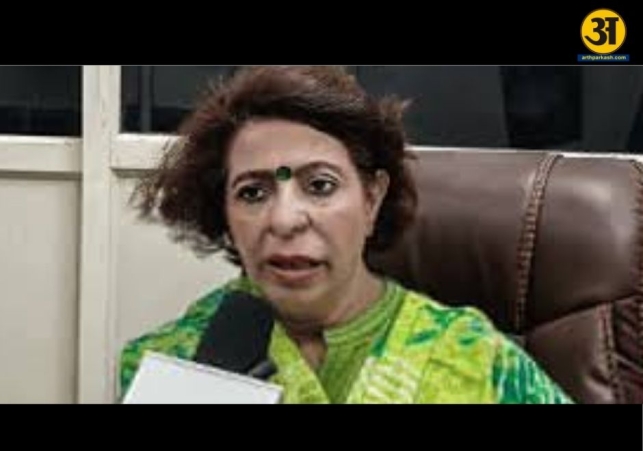
Haryana State Women’s Commission chairperson Renu Bhatia has called for strict action against creators who promote harmful, abusive or disrespectful content through songs and digital media. She said such material is negatively affecting young people, especially school-going students, and harming the dignity of women and girls.
Bhatia urged the Haryana government to introduce stronger regulations, better monitoring systems and clear guidelines to stop the release of such content in the future.
Her remarks come amid recent controversies involving songs accused of promoting gun culture, abusive language and objectionable portrayals of women. One of the latest cases involved the song Tatteri by rapper Aditya Pratap Singh, popularly known as Badshah.
According to Bhatia, the song created concern because it allegedly portrayed schoolgirls in an inappropriate manner. She said such content damages the image and dignity of young girls and sends the wrong message to society.
She shared details of a letter written to Chief Minister Nayab Singh Saini during her visit to Karnal. In the letter, she raised concerns over the increasing trend of songs glorifying violence, illegal weapons and abusive language.
Bhatia said these trends are becoming more common and are influencing children and teenagers who often follow singers, social media personalities and online creators.
She said students are highly impressionable and can easily copy attitudes and behaviour they see in popular media.
Concern over impact on youth
Bhatia said songs that glorify guns, aggression and insulting language can normalise such behaviour in society. She warned that repeated exposure to this type of content may shape how young people think, speak and act.
According to her, this becomes even more worrying when students begin treating violent or disrespectful behaviour as normal.
She said schools should be spaces where children learn values such as respect, equality, discipline and responsibility. However, harmful entertainment content can weaken these values.
Bhatia also linked the issue to the dignity of women. She said songs that mock women or objectify girls promote unhealthy attitudes and disrespect.
She pointed out that governments run campaigns such as Beti Bachao, Beti Padhao to support and educate girls. In such a situation, songs that insult women directly go against these efforts.
ALSO READ: How Lok Sabha seats may change after the Delimitation Bill
ALSO READ: US seeks 20-year nuclear pause while Iran offers 5 years as talks remain deadlocked
She added that society cannot claim to support women’s progress while also allowing degrading content to spread widely.
The commission chief said creators must understand that entertainment also carries responsibility. Freedom of expression is important, but content that promotes hate, violence or humiliation can cause social damage.
She said artists and influencers with large followings especially need to be careful because many young fans treat them as role models.
Action sought against singers
Bhatia said she personally met Chief Minister Nayab Singh Saini earlier this week and requested strong steps against those promoting harmful themes.
She asked for a system where objectionable content can be reviewed quickly and appropriate action can be taken before it spreads widely.
This may include clearer rules, accountability measures and stronger monitoring of songs and digital releases.
She also said the Haryana State Women’s Commission has already written to the National Commission for Women (NCW) seeking similar action at the national level.
Referring to rapper Badshah, Bhatia said the singer had earlier failed to appear before the commission in Panipat. Later, he reportedly appeared before the NCW and apologised.
According to her, he has promised to support the education of 50 girls from economically weaker families and create a song focused on women’s empowerment.
Bhatia said such steps are welcome, but long-term responsibility from creators is more important than apologies after controversies begin.
She also mentioned Haryanvi singer Masoom Sharma, who was recently booked in Dehradun for allegedly using abusive language during an event.
Several of his songs had earlier faced restrictions over allegations that they promoted violence and illegal weapons.
The Haryana Women’s Commission has summoned Sharma to appear before it on April 18 regarding the controversy.
Bhatia said the goal is not to target any individual artist, but to create awareness and accountability in the entertainment space.
She added that music has a powerful influence on society. Songs can inspire positivity, respect and confidence, but they can also spread harmful messages if used irresponsibly.
Many parents and teachers have also raised concerns about children consuming content filled with violent language and disrespectful references.
Experts often say that repeated exposure to aggressive or degrading media can slowly change attitudes, especially among younger audiences.
Bhatia said Haryana wants a cultural environment where creativity thrives but social responsibility remains important.
She called on singers, producers and online creators to use their influence in a better way by promoting equality, education and respect.
The issue has now opened a larger debate about the balance between artistic freedom and social responsibility.
As authorities examine the matter, stricter guidelines for objectionable content may become part of future policy discussions in Haryana and beyond.
Related News